
Call: 08071931936
 Send Inquiry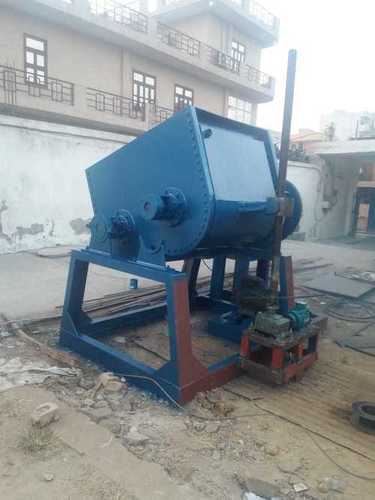
Sigma Mixer
Product Details:
- Type Sigma Mixer
- Material Mild Steel / Stainless Steel
- Capacity 50 - 5000 Liters
- Computerized No
- Automatic Grade Semi-Automatic / Automatic
- Voltage 220V / 380V / 415V
- Frequency (MHz) 50 - 60
- Click to View more
X
Sigma Mixer Price And Quantity
- Tilting type / Bottom discharge valve
- 3 kW - 50 kW (varies with capacity)
- Electric motor with gear reducer
- Horizontal U-shaped
- Polished / Painted
- Included, with standard / digital controls
- Twin Sigma shaped blades
- Mixing high viscosity materials such as dough, adhesives, rubber, and chemicals
- Overload protection, emergency stop switch
- Available for heating/cooling
- Stainless Steel / Alloy Steel
- Chemicals, food, rubber, pharmaceuticals, soap, and related industries
Sigma Mixer Product Specifications
- 50 - 60
- Customizable
- 1500 - 7000 kg (According to model)
- 50 - 5000 Liters
- Semi-Automatic / Automatic
- Mild Steel / Stainless Steel
- Customizable
- No
- Customizable as per capacity
- 220V / 380V / 415V
- Sigma Mixer
- Tilting type / Bottom discharge valve
- 3 kW - 50 kW (varies with capacity)
- Electric motor with gear reducer
- Horizontal U-shaped
- Polished / Painted
- Included, with standard / digital controls
- Twin Sigma shaped blades
- Mixing high viscosity materials such as dough, adhesives, rubber, and chemicals
- Overload protection, emergency stop switch
- Available for heating/cooling
- Stainless Steel / Alloy Steel
- Chemicals, food, rubber, pharmaceuticals, soap, and related industries
Sigma Mixer Trade Information
- All India
Product Description
The Sigma Mixer Manufactrured by Star Material Handeling Projects in DelhiIn Sigma mixers handling very viscous materials, it is necessary to promote both lateral and transverse motion of the material. Thegeometry and profile of the sigma blade is designed like that the viscous mass of material is pulled and sheared, compressed, kneaded,and folded by the action of the blade against in the walls of the mixer.
Efficient Mixing for High Viscosity Applications
Our Sigma Mixer is engineered to handle tough mixing tasks involving viscous materials across various industries, including chemicals, food, rubber, and pharmaceuticals. The machine's twin Sigma-shaped blades provide optimal kneading and dispersion within a horizontal U-shaped vessel, promoting uniform consistency for products like adhesives and dough.
Flexible Design and Customization
Sigma Mixers are available in different capacities, from 50 to 5000 liters, with customizable dimensions and finishes-polished or painted. The mixing vessel can be jacketed for heating or cooling processes, and both mild steel and stainless steel constructions are offered to meet specific application requirements.
Advanced Controls and Safety Features
Equipped with user-friendly control panels, these mixers offer both standard and digital control options. Operator safety is prioritized with built-in overload protection and an emergency stop switch, ensuring reliable operation in demanding environments.
FAQ's of Sigma Mixer:
Q: How does the Sigma Mixer ensure effective mixing of high viscosity materials?
A: The Sigma Mixer uses twin Sigma-shaped blades rotating within a horizontal U-shaped vessel, providing intense kneading and shearing action. This mechanism blends highly viscous materials such as dough, adhesives, and rubber to achieve a uniform mixture.Q: What industries can benefit from using the Sigma Mixer?
A: The Sigma Mixer is suitable for diverse industries including chemicals, food processing, rubber manufacturing, pharmaceuticals, soap production, and other sectors that require thorough mixing of heavy or sticky substances.Q: When should a jacketed vessel be selected for the Sigma Mixer?
A: A jacketed vessel is recommended when temperature control is necessary during mixing, such as heating or cooling the material. This is common in processes involving chemicals, soap, or dough, where precise thermal management enhances product quality and consistency.Q: Where can customization be applied in the Sigma Mixer's design?
A: Customizations are available in capacity (ranging from 50 to 5000 liters), dimensions, blade material, vessel construction, discharge method, finishing (painted or polished), and control panel type. This ensures alignment with specific process requirements and space constraints.Q: What are the available discharge options for processed materials in Sigma Mixers?
A: Sigma Mixers feature both tilting type and bottom discharge valves, enabling efficient and flexible removal of mixed material based on the product and workflow needs.Q: How do the safety features protect users during operation?
A: The mixer is equipped with overload protection and an emergency stop switch, preventing damage to the machine and ensuring operator safety during unforeseen incidents or operational anomalies.Q: What are the benefits of using an electric motor with gear reducer in the Sigma Mixer?
A: The electric motor with gear reducer provides controlled, powerful motion for the blades, resulting in consistent mixing performance across different viscosities while optimizing energy consumption, which ranges from 3 kW to 50 kW depending on the mixer's capacity.Tell us about your requirement

Price:
Quantity
Select Unit
- 50
- 100
- 200
- 250
- 500
- 1000+
Additional detail
Mobile number
Email

Other Products in 'Processing Machines & Equipment' category

Contact Details
GST : 07AKOPJ2426M1ZU
- Flat No. - 1375, 3rd Floor, Pocket GH-1, Sec-28, Rohini,Delhi - 110085, India
- Phone :08071931936

 Send Inquiry
Developed and Managed by Infocom Network Private Limited.
